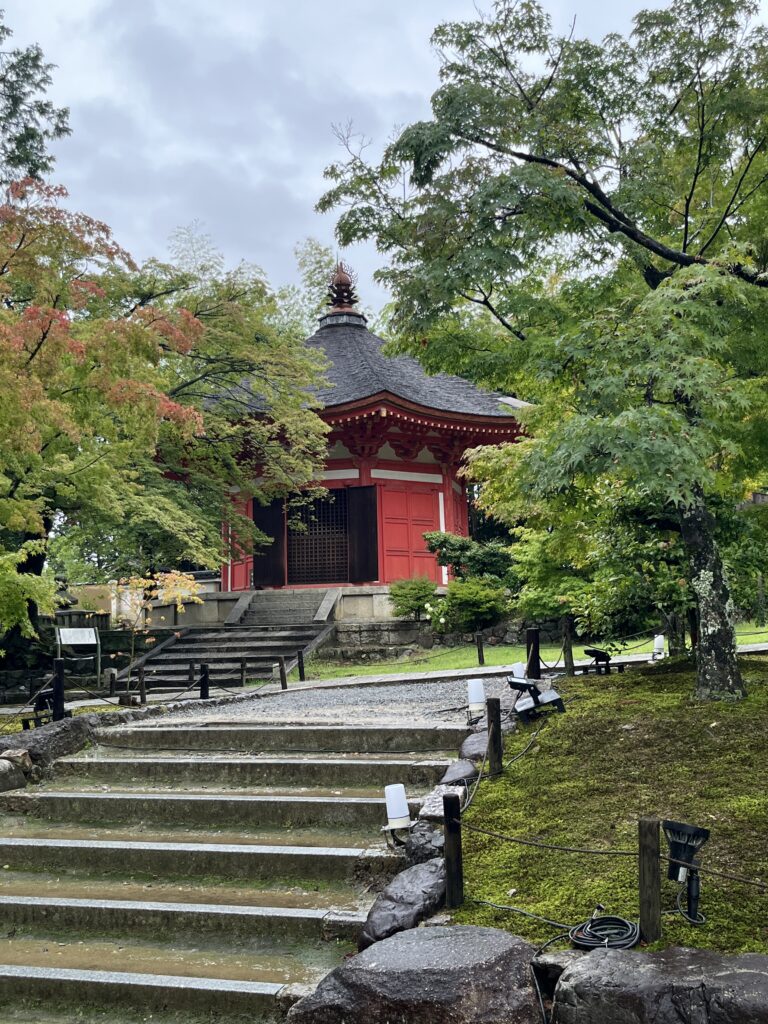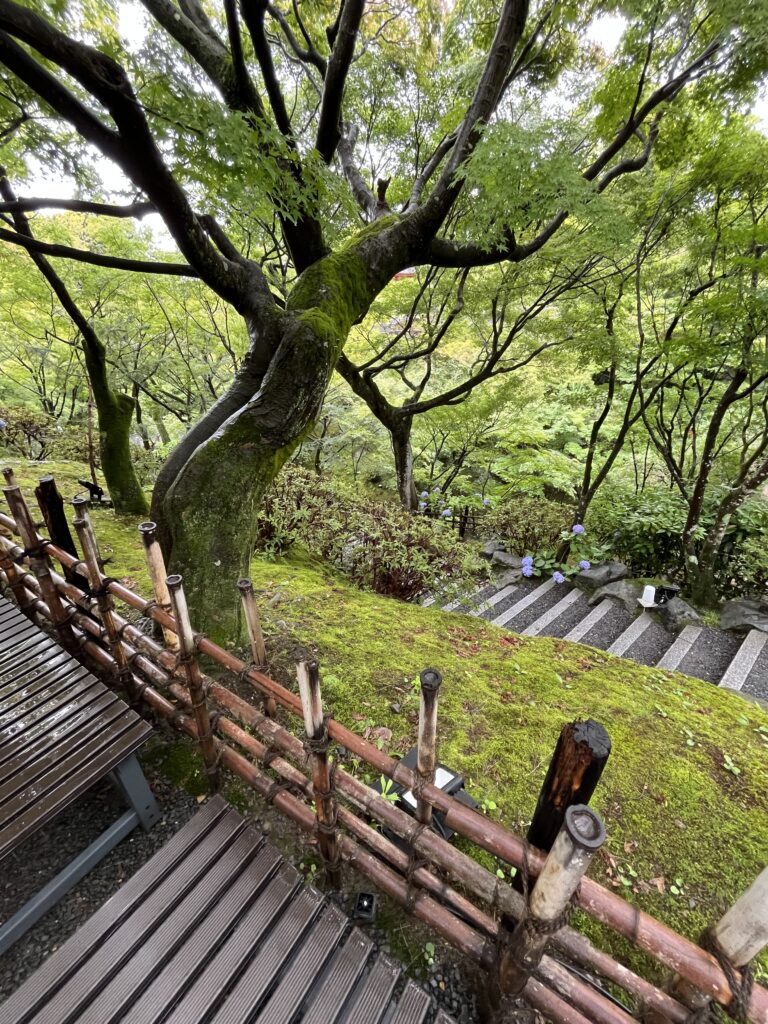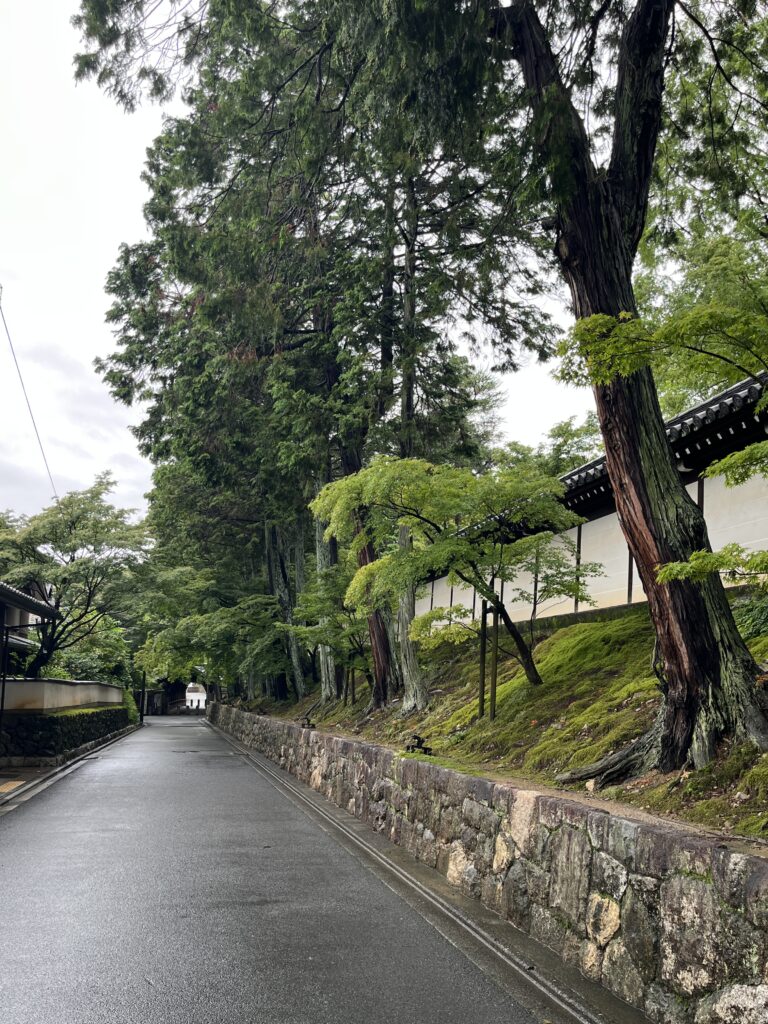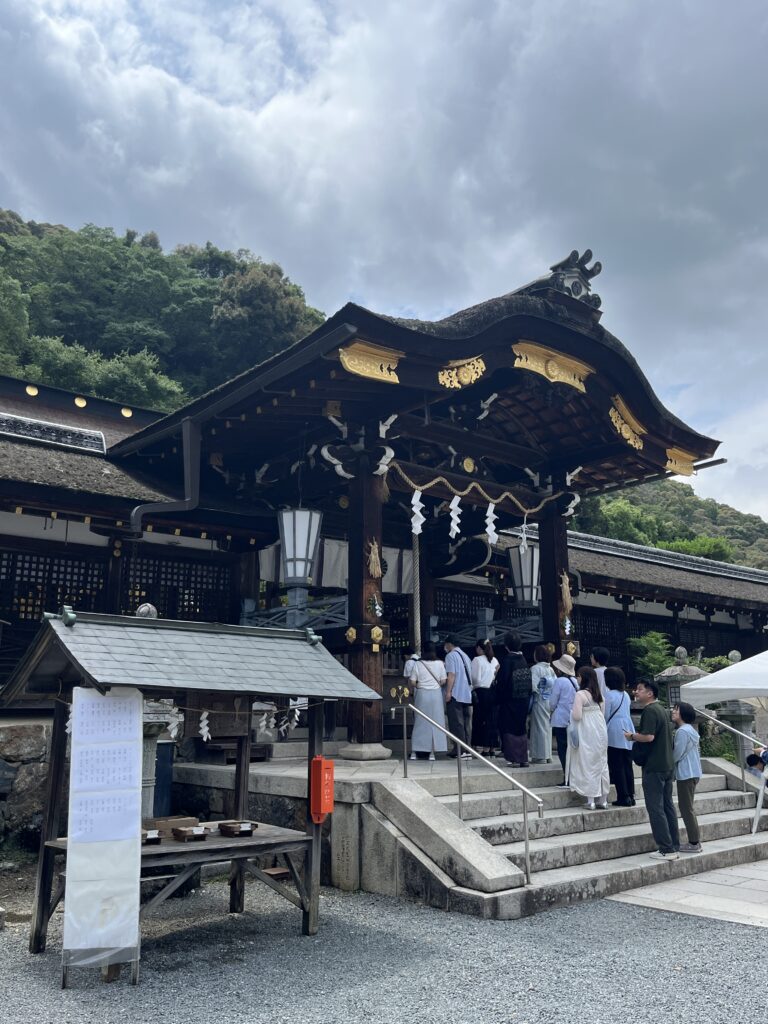
Funda-in Temple in Tofukuji Temple (The typhoon has passed…. ) (芬陀院 東福寺)

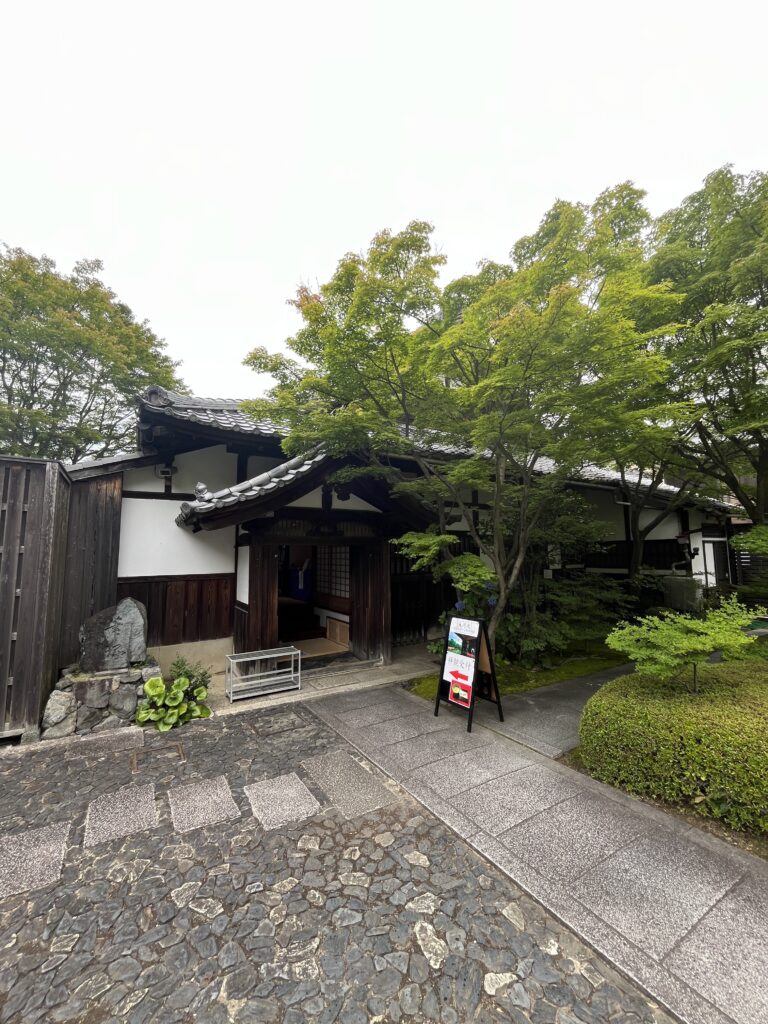
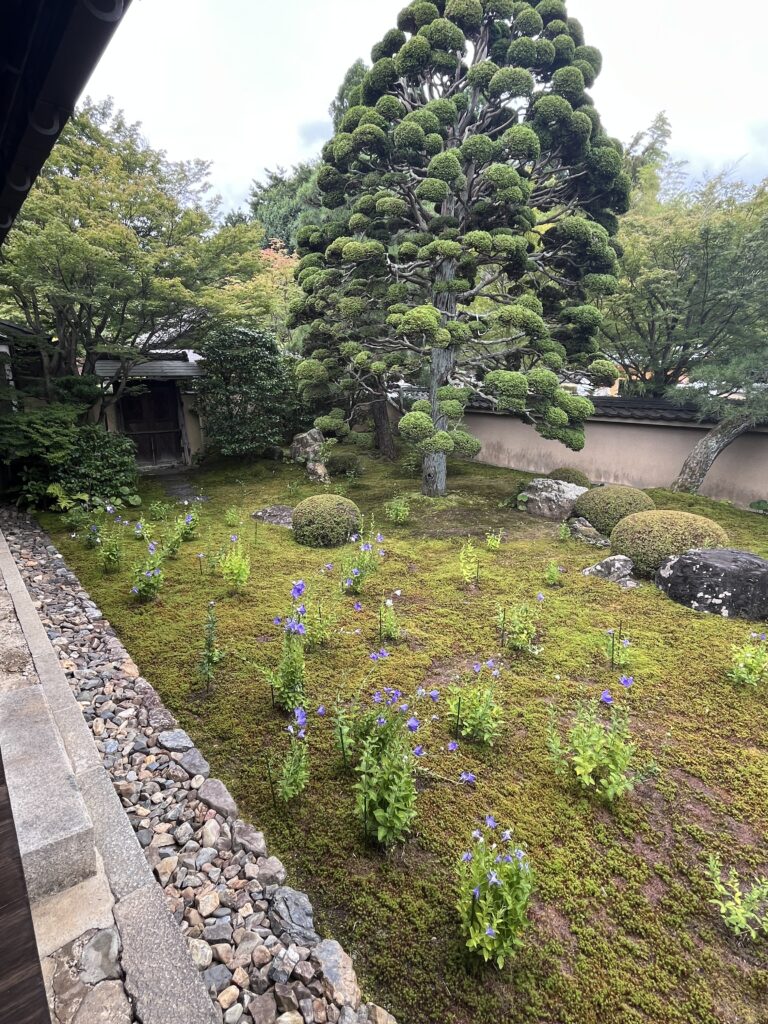
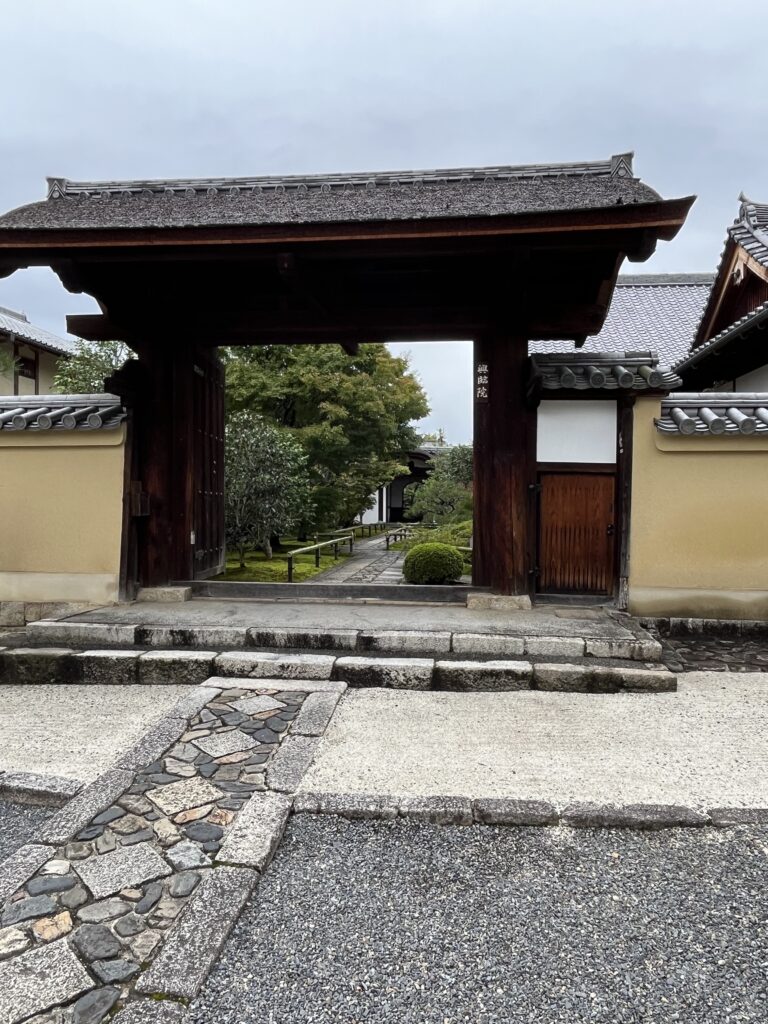
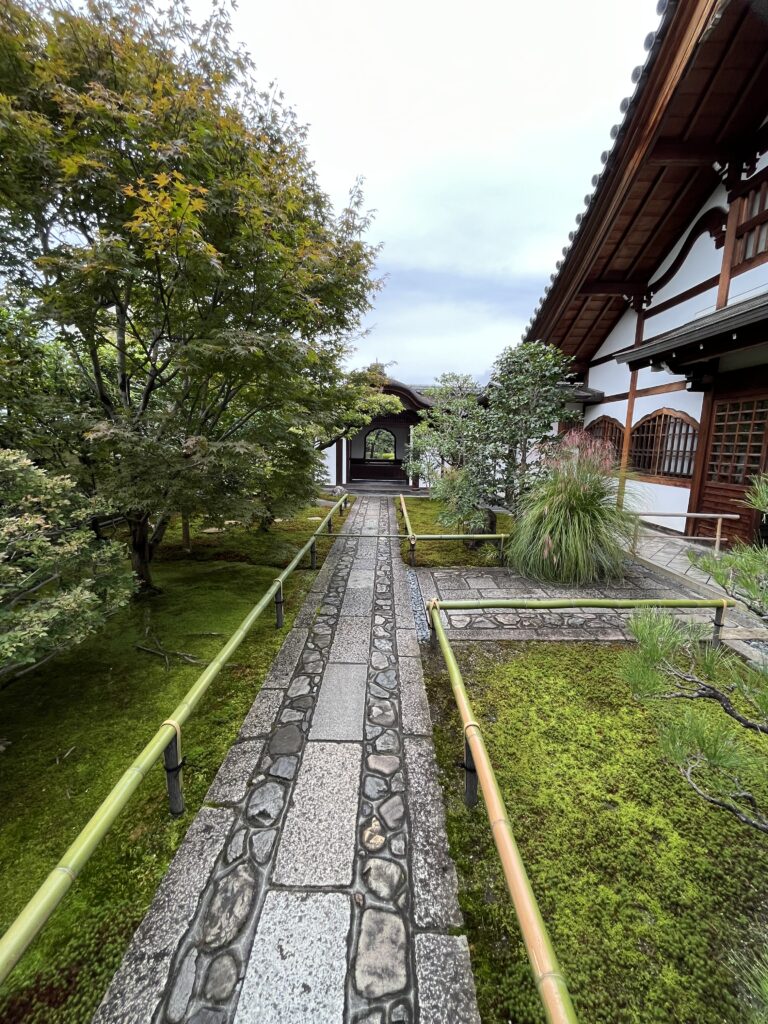
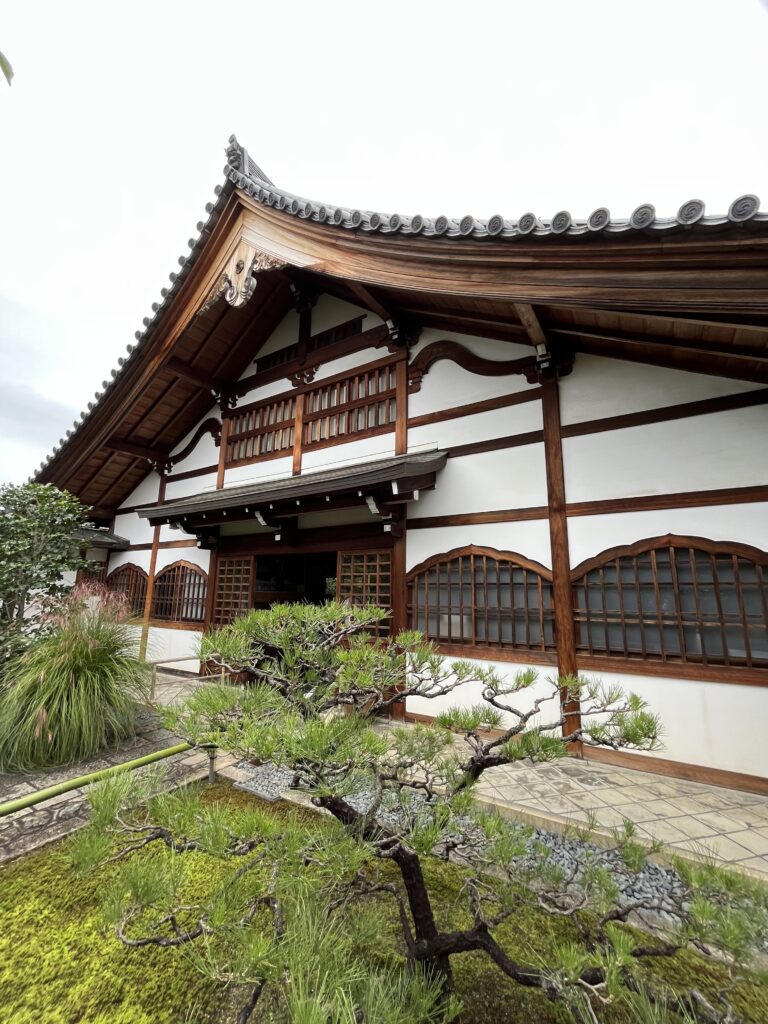
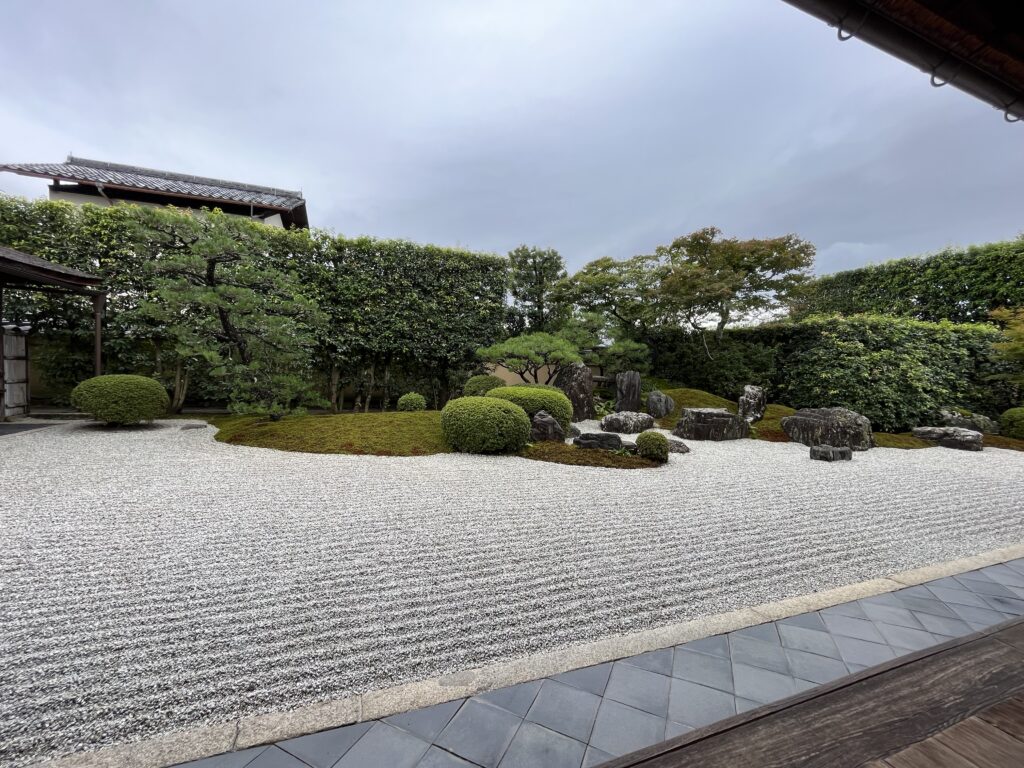
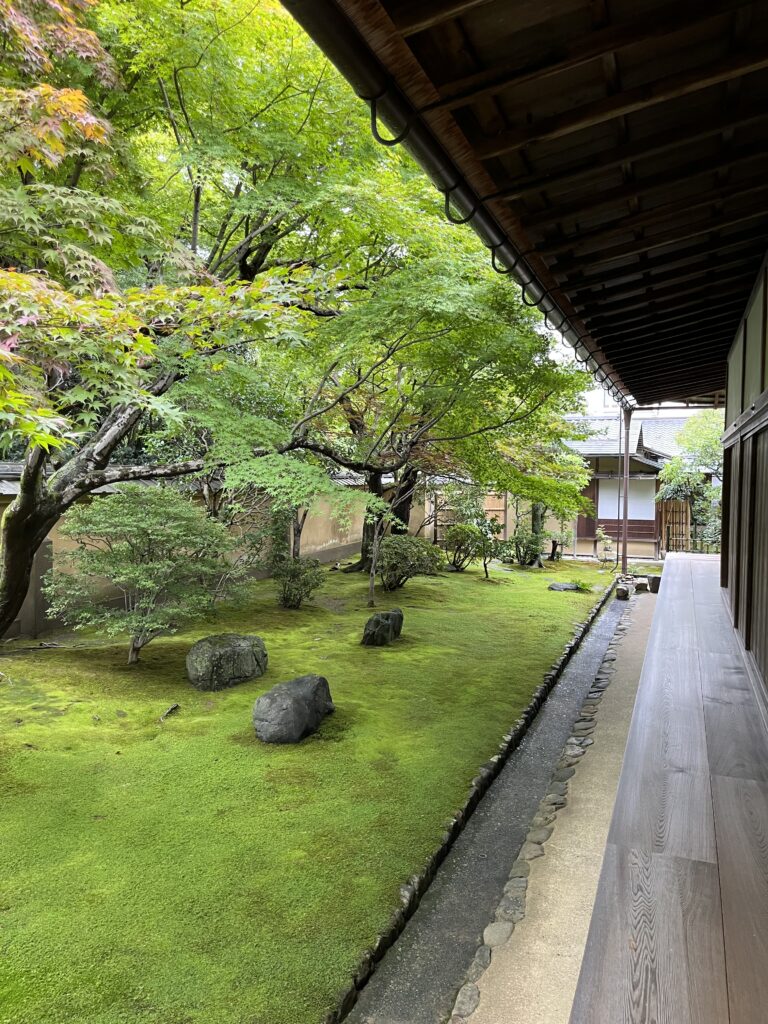
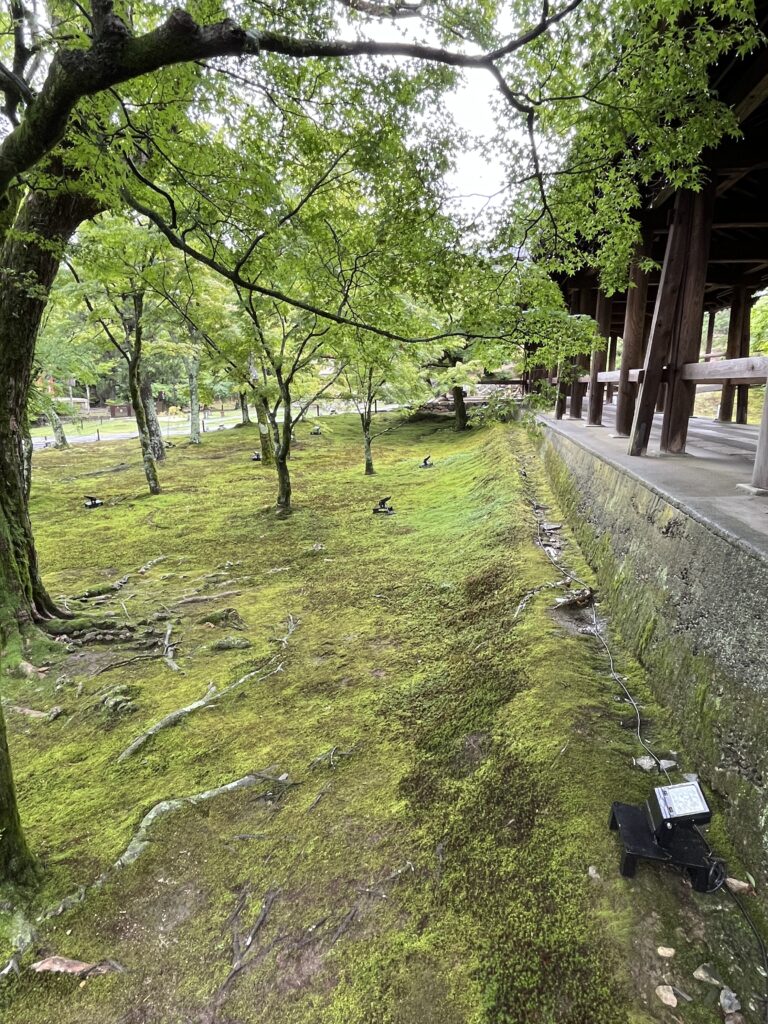
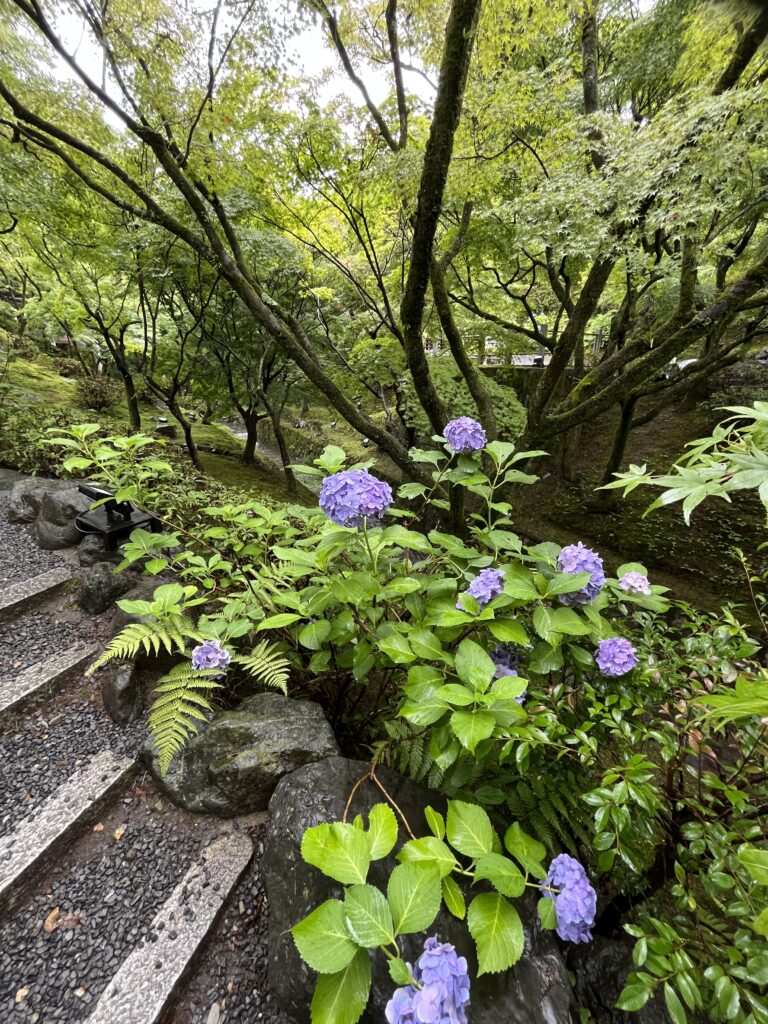
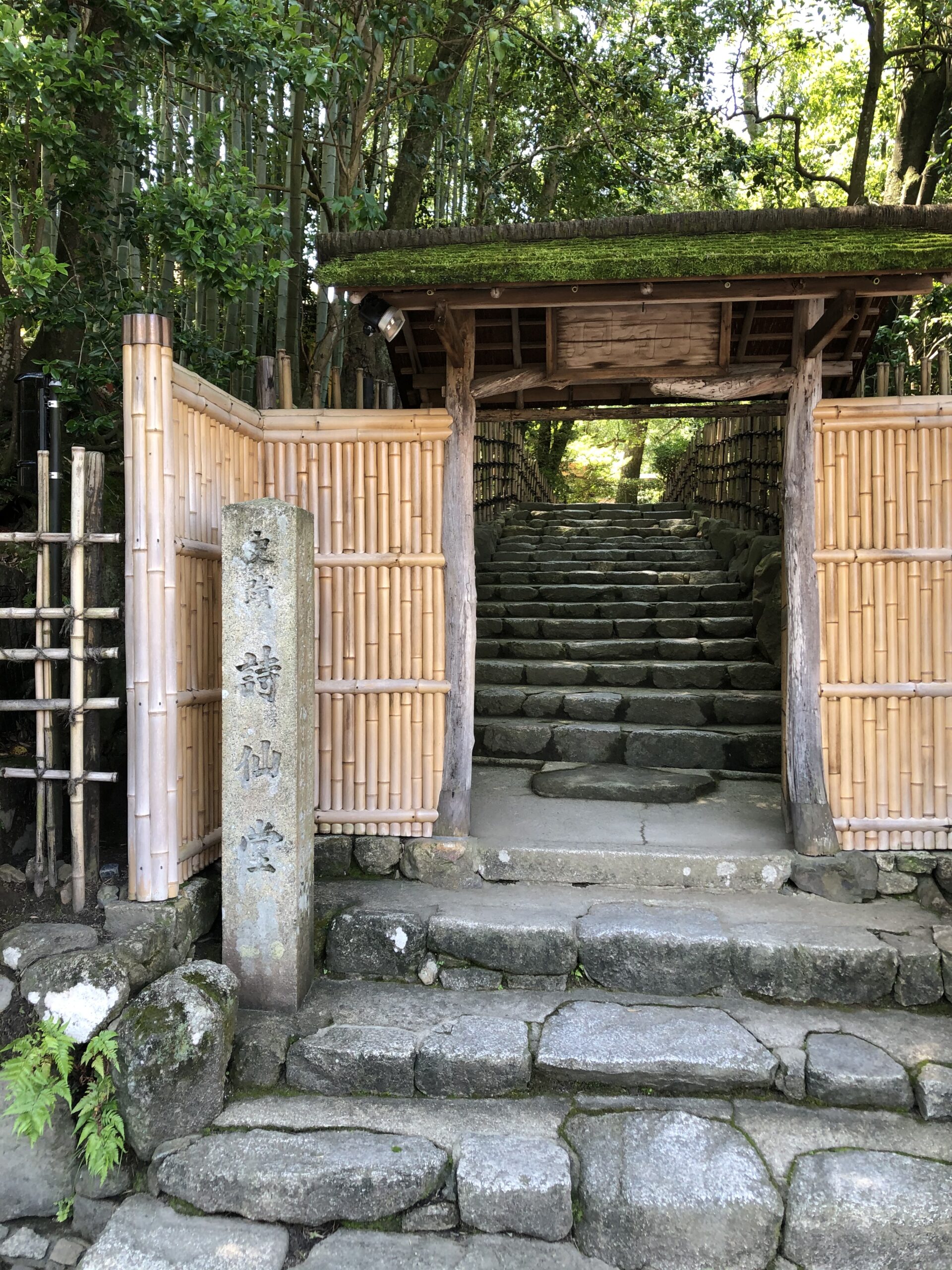
After the typhoon has passed, I visited Funda-in (also known as Sesshu-ji)—one of the sub-temples of Tofuku-ji Temple this morning.
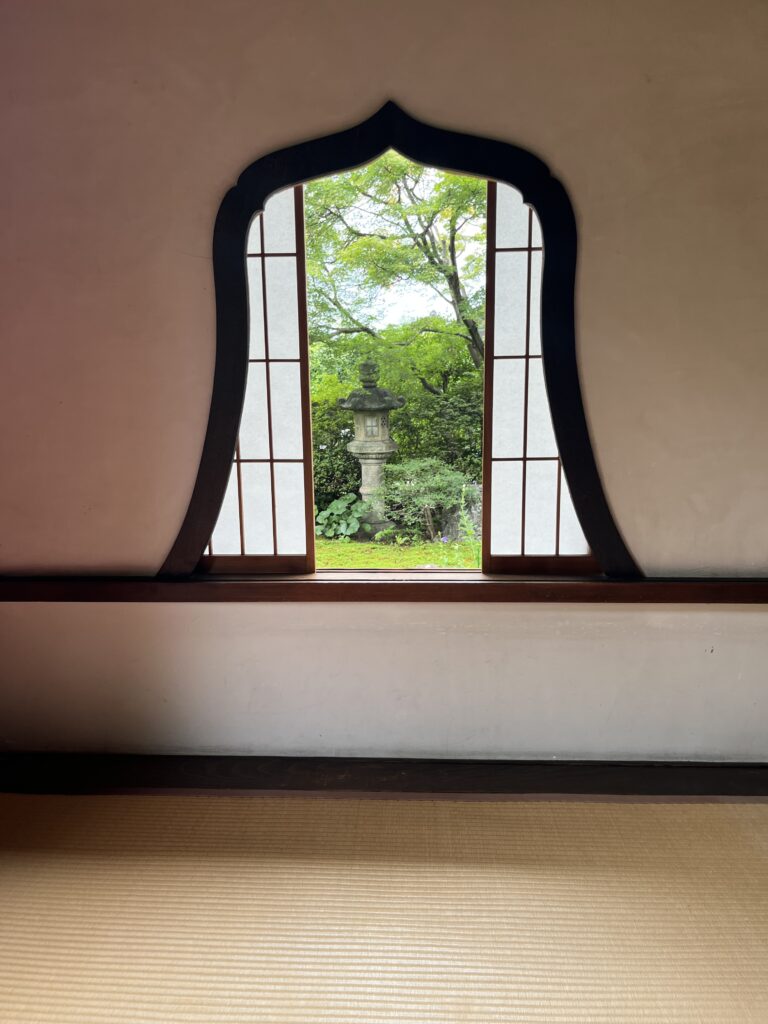
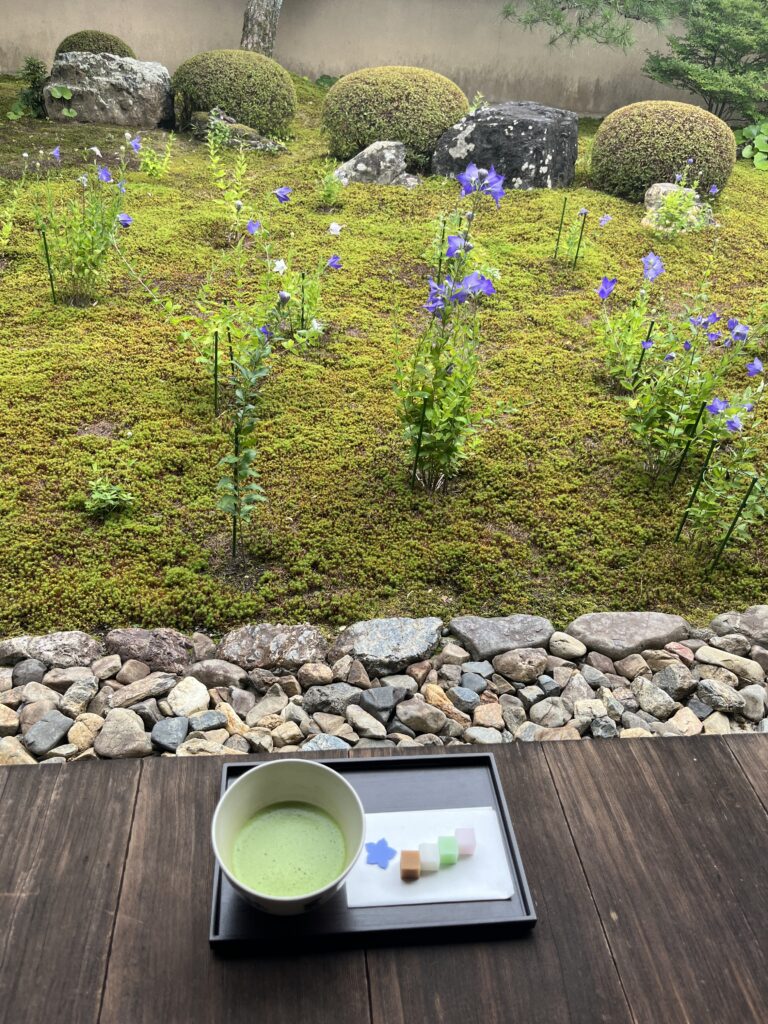
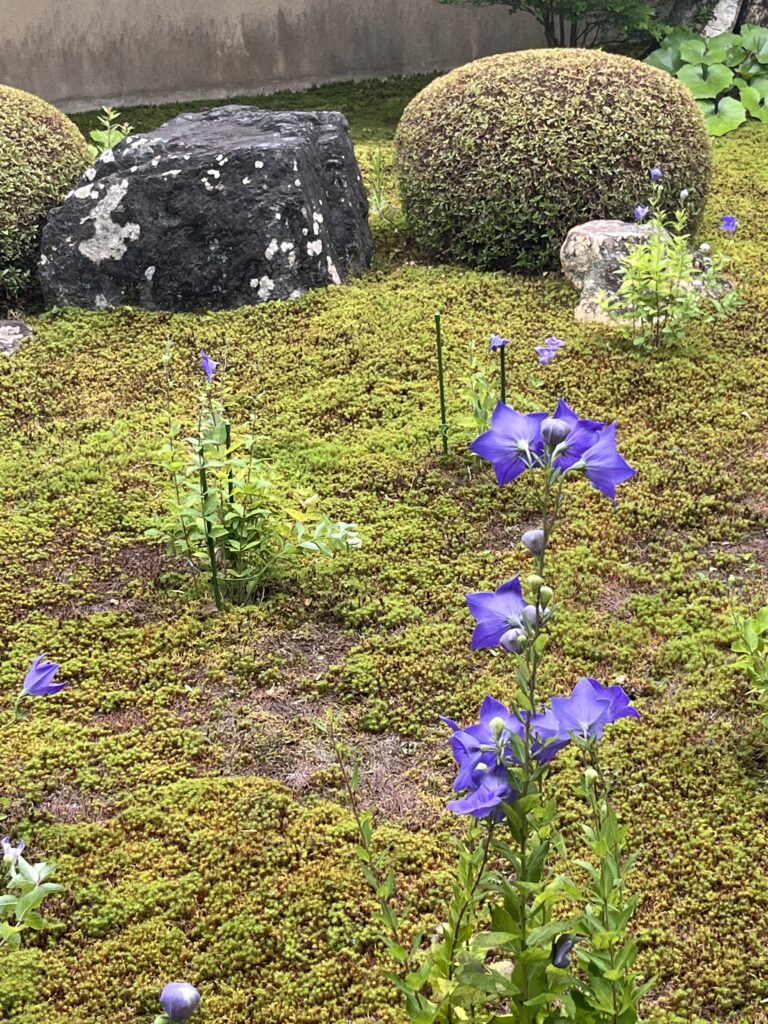
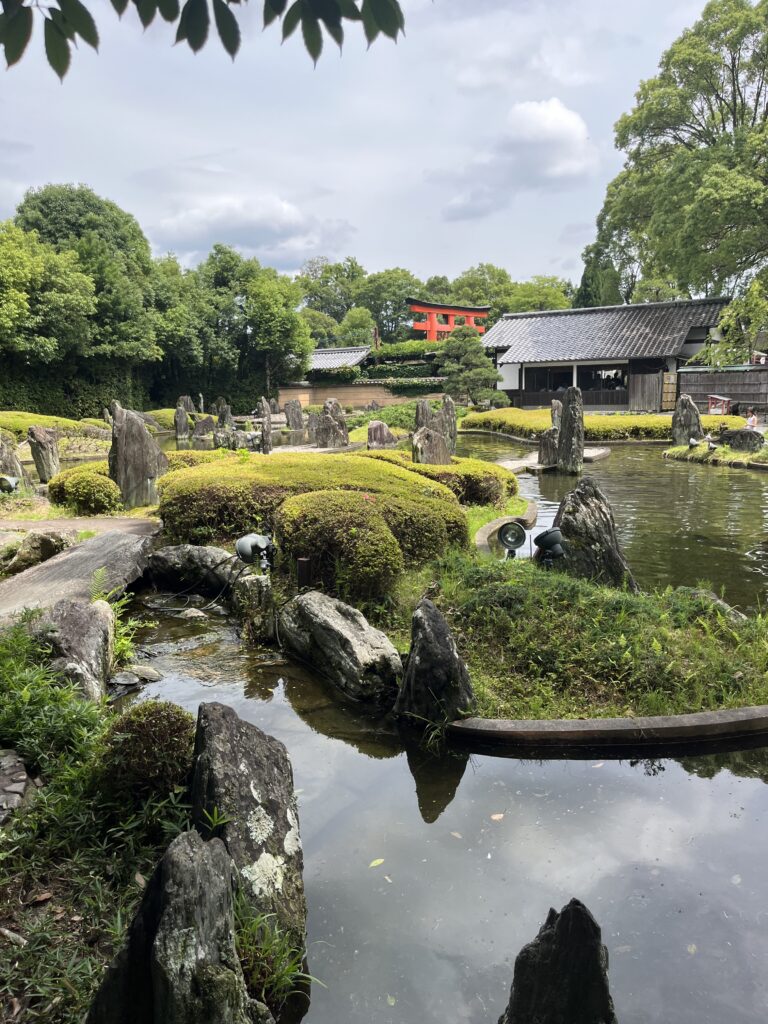
I was able to admire a beautiful garden featuring fresh greenery and moss.
Funda-in is also known as Sesshu-ji temple because its garden was designed by Sesshu, a master of ink-wash painting.
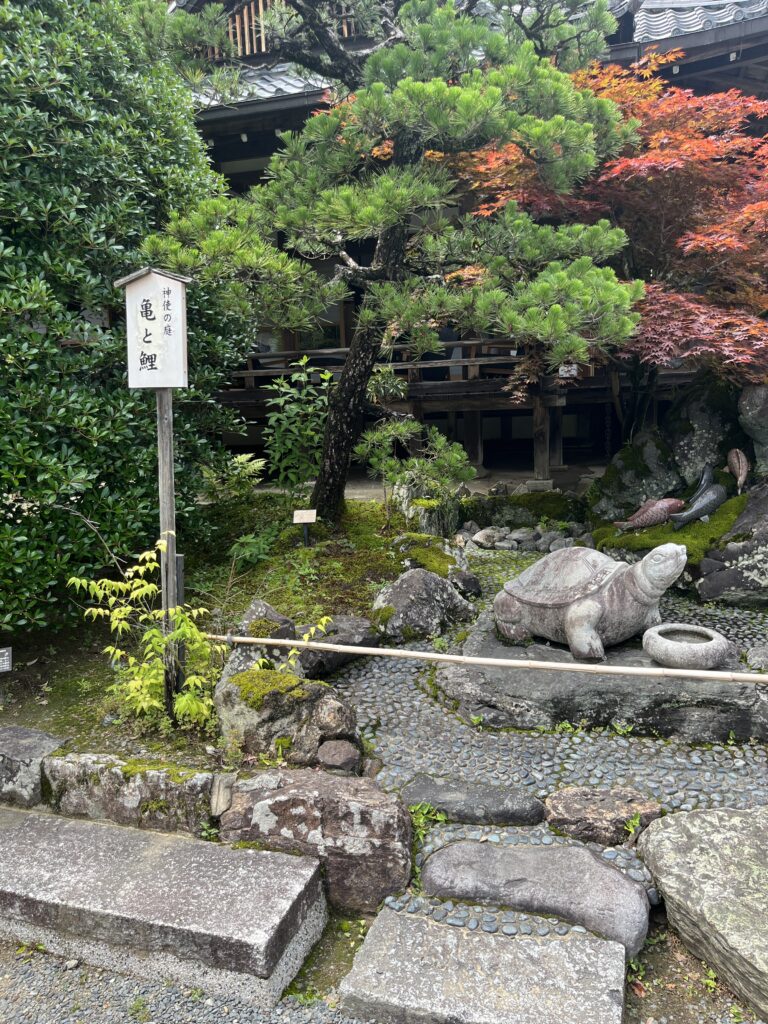
Stones representing a crane and a turtle are arranged amidst beautiful moss, and the area is known as the Crane and Turtle Garden.


Location

Koun-ji Temple (光雲寺)

Koun-ji Temple is an off-site sub-temple of the Nanzen-ji school of the Rinzai sect. It served as the family mortuary temple for Tofukumon-in—consort to Emperor Go-Mizunoo and daughter of Tokugawa Hidetada—who personally oversaw its reconstruction.
Its garden was designed by the seventh-generation Jihei Ogawa, a leading figure in modern Japanese landscape gardening.
Although the temple is not usually open to the public, the Buddha Hall can be glimpsed from the “Philosopher’s Path.”

※This year marks the 400th anniversary of the “Kan’ei Imperial Visit”, and various events are scheduled in Kyoto.

Location

Shiramine jingu Shrine (白峯神宮)

Shiramine jingu Shrine was founded in 1868 (the first year of the Meiji era) by Emperor Meiji, who had the spirit of Emperor Sutoku transferred here from the Shiramine Mausoleum in Sanuki (present-day Kagawa Prefecture). Later, in 1873, the spirit of Emperor Junnin was also transferred from the Awaji Mausoleum and enshrined alongside him.
Emperor Sutoku is a familiar figure through the *Ogura Hyakunin Isshu* (an anthology of one hundred poems by one hundred poets), while Emperor Junnin was the son of Prince Toneri, who compiled the *Nihon Shoki* (Chronicles of Japan).
Fulfilling a heartfelt wish of Emperor Meiji, the shrine was established on the former estate of the Asukai family—masters of the traditional arts of *mari* (ancient Japanese football) and *waka* poetry—to console the spirits of these two emperors, both of whom had ended their lives in exile.
Balls used in various sports have been dedicated to the shrine, including official match balls from the France and Japan-South Korea Soccer World Cups, as well as the official volleyball used at the Athens Olympics.

Location

Chion-ji Temple (知恩寺)

Chion-ji Temple, located in the Hyakumanben area of ​​Higashiyama Ward, Kyoto, is one of the seven major head temples of the Jodo (Pure Land) sect.
When an epidemic broke out, the priest Kūen quelled the disease through the “Hyakumanben Nenbutsu” (recitation of the Buddha’s name one million times), and was subsequently granted the title “Hyakumanben” by Emperor Go-Daigo.
Within the temple precincts, the Mie-dō (Founder’s Hall)—enshrining an image of the priest Hōnen—stands at the front, while the Shakadō (Main Hall) is located to the east and the Amidadō (Amida Hall) to the west.

Location

Choraku-ji Temple (長楽寺)

Choraku-ji Temple is located in Maruyama-cho, east of Gion Yasaka Shrine in Kyoto’s Higashiyama Ward.
It is a Tendai sect temple founded in 805—following the relocation of the capital to Heian-kyo—by Saicho under the imperial decree of Emperor Kanmu; it was later converted to the Ji sect.
Kenreimon-in, a daughter of Taira no Kiyomori, is said to have taken Buddhist vows at this temple.

Location